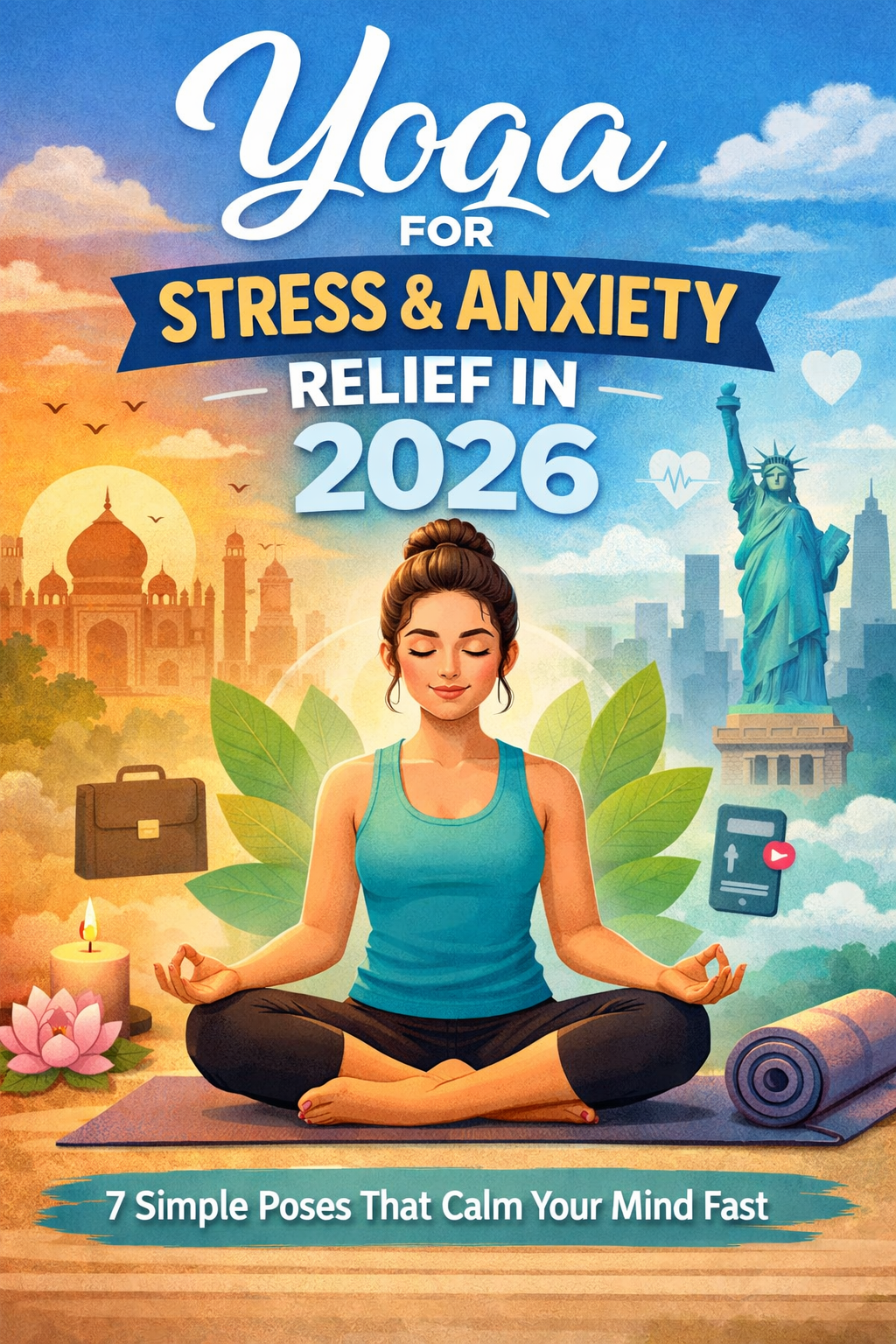
Stress and anxiety are becoming more common in 2026. Busy work schedules, financial pressure, social media, and family responsibilities can make life overwhelming.
The good news? Yoga is a natural and powerful way to calm your mind and relax your body.
Yoga started in India thousands of years ago, and today millions of people in the USA and around the world use it for stress relief.
In this guide, you will learn 7 simple yoga poses that can quickly reduce stress and anxiety — even if you are a beginner.
Why Yoga Helps with Stress and Anxiety
Yoga works because it:
- Slows down your breathing
- Reduces cortisol (the stress hormone)
- Relaxes tight muscles
- Improves sleep
- Clears negative thoughts
Even 10–20 minutes daily can make a big difference.
7 Simple Yoga Poses That Calm Your Mind Fast
1. Child’s Pose (Balasana)
Best for: Instant relaxation
- Kneel on the floor
- Sit back on your heels
- Stretch your arms forward
- Rest your forehead on the mat
Take slow, deep breaths for 1–2 minutes.
This pose relaxes your nervous system and reduces anxiety quickly.
2. Cat-Cow Pose (Marjaryasana–Bitilasana)
Best for: Releasing tension
- Come on your hands and knees
- Inhale: Lift your head and arch your back (Cow)
- Exhale: Round your spine and tuck your chin (Cat)
Repeat 10 times slowly.
Helps release stress stored in your back and shoulders.
3. Standing Forward Bend (Uttanasana)
Best for: Calming the brain
- Stand straight
- Bend forward and let your head hang
- Keep knees slightly bent
Stay for 30–60 seconds.
Increases blood flow to the brain and reduces anxiety.
4. Legs Up the Wall (Viparita Karani)
Best for: Deep relaxation
- Lie on your back
- Place your legs up against a wall
- Relax your arms beside you
Stay for 5–10 minutes.
This pose reduces stress, improves circulation, and helps with sleep.
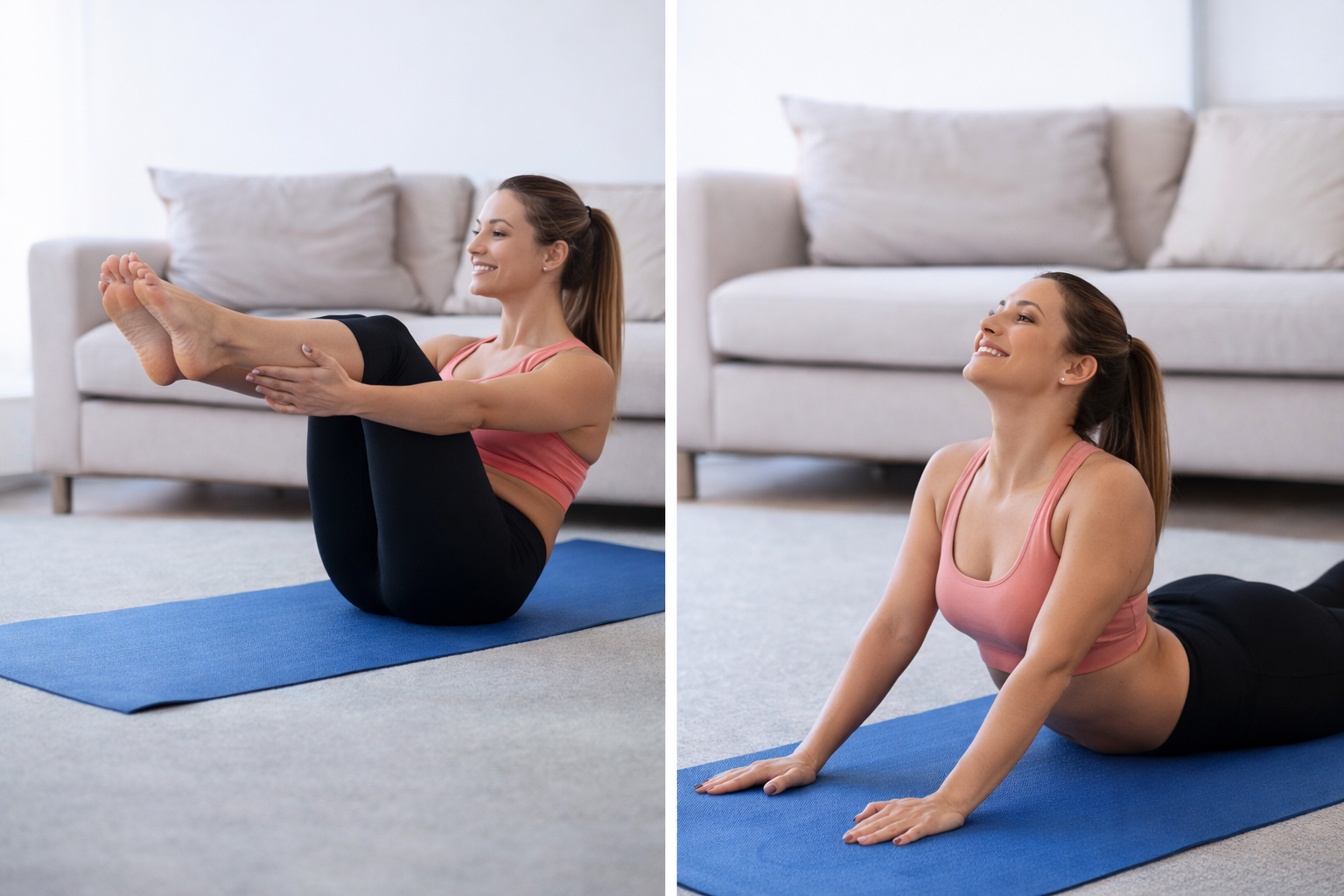
5. Seated Forward Bend (Paschimottanasana)
Best for: Quieting the mind
- Sit with legs stretched out
- Slowly bend forward
- Reach toward your toes
Hold for 1 minute with deep breathing.
Helps reduce mental fatigue.
6. Bridge Pose (Setu Bandhasana)
Best for: Reducing anxiety symptoms
- Lie on your back
- Bend knees, feet flat on floor
- Lift hips toward ceiling
Hold for 30 seconds.
Opens the chest and improves breathing.
7. Corpse Pose (Savasana)
Best for: Total stress relief
- Lie flat on your back
- Close your eyes
- Relax your entire body
Stay for 5–10 minutes.
This is the most important pose for calming anxiety.
10-Minute Daily Routine for Stress Relief
If you are busy, follow this simple routine:
- Cat-Cow – 2 minutes
- Child’s Pose – 2 minutes
- Standing Forward Bend – 1 minute
- Bridge Pose – 1 minute
- Legs Up the Wall – 2 minutes
- Savasana – 2 minutes
That’s it! Just 10 minutes a day.
Extra Tips to Reduce Anxiety Naturally
- Practice deep breathing
- Avoid too much caffeine
- Sleep at least 7 hours
- Reduce screen time before bed
- Spend time in nature
Yoga works even better when combined with healthy habits.
In 2026, stress and anxiety are common — but they don’t have to control your life.
Yoga is simple, natural, and effective. You don’t need expensive equipment or a gym membership. Just a quiet space and 10–20 minutes daily.
Start today. Your mind and body will thank you.
Frequently Asked Questions (FAQs)
1. How long does yoga take to reduce anxiety?
Many people feel calmer after just one session. For long-term benefits, practice 3–5 times a week.
2. Can beginners do these yoga poses?
Yes. These poses are beginner-friendly and safe for most people.
3. Is yoga better than medication for anxiety?
Yoga helps naturally, but if you have severe anxiety, talk to a doctor. Yoga can be used along with treatment.
4. What is the best time to do yoga for stress?
Morning for energy or evening for relaxation — both work well.
5. Can yoga stop panic attacks?
Yoga may reduce the frequency and intensity, but it is not a replacement for medical care.