Many people focus on weight loss or calories but forget about gut health. Your gut plays an important role in digestion, immunity, energy levels, and even mood. When your diet is not balanced, your digestive system can send warning signals. These signs are often ignored because they seem normal, but they may indicate that your gut needs better nutrition. The good news is that simple food changes can help improve gut health naturally.
In this article, we explain common warning signs that your diet may be harming your gut and what foods you can eat instead to support better digestion and overall health.
What Is Gut Health and Why It Matters
Gut health refers to the balance of good and bad bacteria in your digestive system. A healthy gut helps your body absorb nutrients, fight infections, and maintain stable energy levels. Poor eating habits, processed foods, excess sugar, and low fiber intake can disturb this balance.
When gut bacteria become unbalanced, it can lead to bloating, discomfort, and long-term health problems. Paying attention to diet is one of the easiest ways to restore gut health.
Common Warning Signs Your Diet Is Hurting Your Gut
Many gut problems start slowly. Here are some common signs to watch for:
- Frequent bloating or gas after meals
- Constipation or diarrhea
- Constant fatigue or low energy
- Frequent sugar cravings
- Skin problems like acne or irritation
- Trouble sleeping
- Weak immunity or frequent illness
If these symptoms appear regularly, your gut may not be getting the nutrients it needs.
Foods That Can Harm Gut Health
Certain foods can negatively affect gut bacteria, especially when eaten often.
| Food Type | Why It Harms Gut Health |
|---|---|
| Highly processed foods | Low in fiber and high in additives |
| Sugary drinks and sweets | Feed harmful bacteria |
| Fried and oily foods | Slow digestion |
| Artificial sweeteners | May disturb gut bacteria balance |
| Excess alcohol | Irritates gut lining |
Reducing these foods can help your digestive system recover over time.
What to Eat Instead for a Healthier Gut
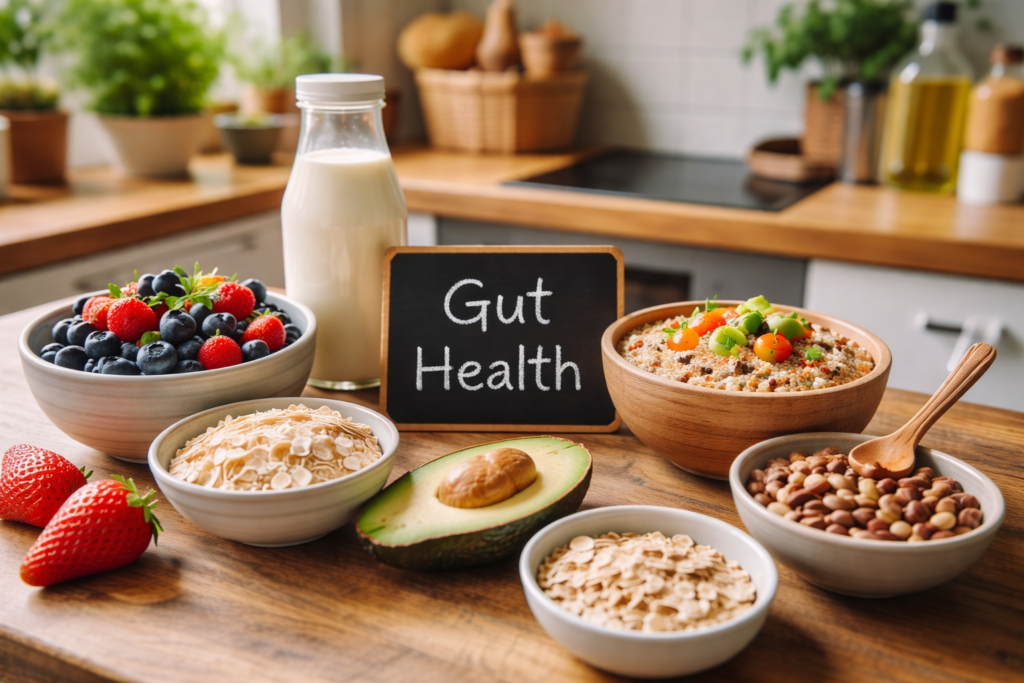
Replacing unhealthy foods with gut-friendly options can make a big difference.
| Gut-Friendly Food | Benefits for Digestion |
|---|---|
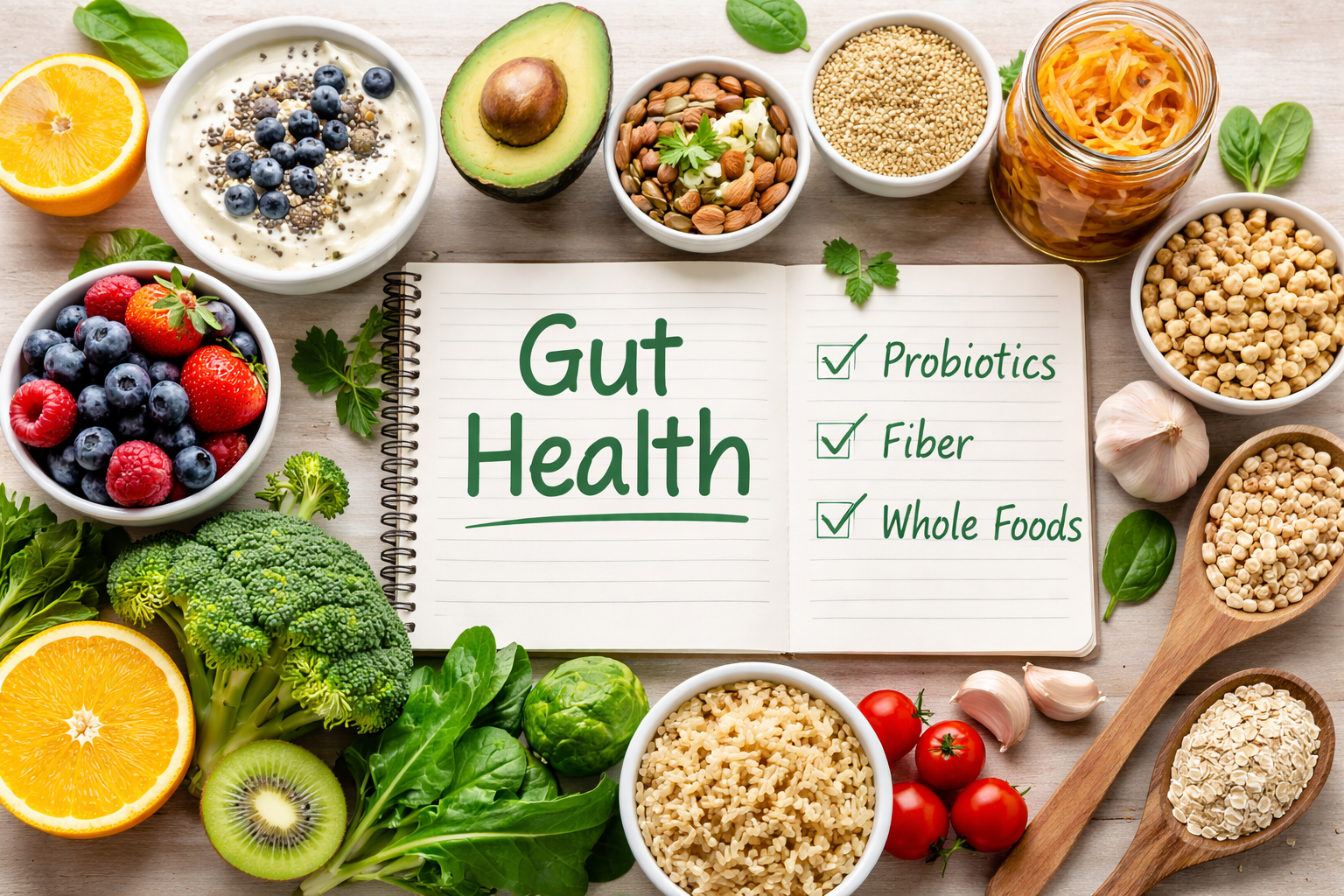
| Yogurt and fermented foods | Add good bacteria (probiotics) |
| Fruits and vegetables | Provide fiber for gut bacteria |
| Whole grains | Support healthy digestion |
| Nuts and seeds | Improve gut diversity |
| Lentils and beans | High in fiber and nutrients |
| Plenty of water | Helps smooth digestion |
Adding these foods gradually helps avoid sudden digestive discomfort.
Simple Diet Changes That Improve Gut Health
You do not need a strict diet to improve your gut. Small daily changes work best:
- Eat more fiber-rich foods
- Reduce processed snacks
- Drink enough water daily
- Eat slowly and chew properly
- Include fermented foods several times a week
- Limit added sugar intake
Consistency is more important than making sudden big changes.
When to See a Doctor
Occasional digestive problems are normal, but ongoing symptoms should not be ignored. If you experience severe stomach pain, unexplained weight loss, or long-term digestive issues, it is important to consult a healthcare professional.
Your gut health is closely connected to what you eat every day. Warning signs such as bloating, fatigue, sugar cravings, and irregular digestion may indicate that your diet needs improvement. By reducing processed foods and adding fiber-rich and probiotic foods, you can support healthy gut bacteria and improve digestion naturally. Simple changes like eating whole foods, drinking enough water, and maintaining a balanced diet can lead to better energy levels, stronger immunity, and improved overall well-being. Taking care of your gut today can help prevent long-term health problems and make daily life more comfortable and healthier.
FAQs
1. How do I know if my gut health is poor?
Common signs include bloating, gas, irregular bowel movements, fatigue, and frequent cravings for sugar.
2. How long does it take to improve gut health?
Some people notice improvement within a few weeks after changing their diet, but long-term consistency is important.
3. Are probiotics necessary for gut health?
Not always. Many people can improve gut health through natural foods like yogurt, kefir, and fermented vegetables.
4. Can drinking water improve digestion?
Yes, proper hydration helps food move smoothly through the digestive system.
5. What is the best food for gut health?
Fiber-rich foods such as fruits, vegetables, whole grains, and fermented foods are very helpful.