In recent years, seed oils and processed foods have become a major topic in health discussions across the United States. Many people are confused about whether seed oils are harmful or safe to eat. Since processed foods make up a large part of the modern diet, understanding how these ingredients affect your body is important. Nutrition experts say the real issue is not just seed oils alone, but how often highly processed foods are consumed and how they replace whole, natural foods in daily meals.
This article explains in simple terms what seed oils are, how processed foods affect health, and what smarter food choices you can make for better long-term wellness.
What Are Seed Oils?
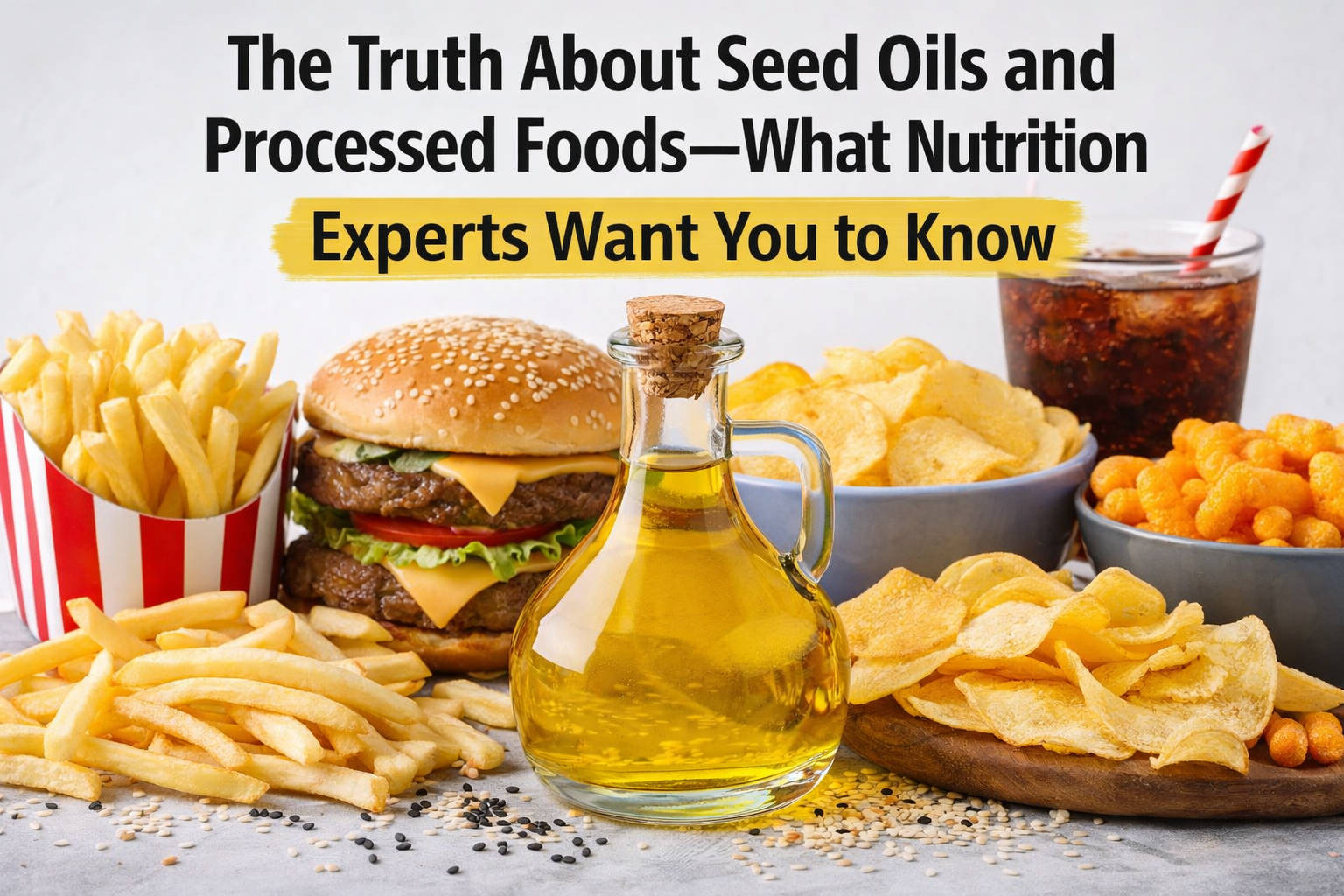
Seed oils are vegetable oils made from plant seeds. Common examples include:
- Soybean oil
- Corn oil
- Sunflower oil
- Canola oil
- Cottonseed oil
These oils are widely used in packaged snacks, fast food, restaurant cooking, and ready-to-eat meals because they are affordable and have a long shelf life.
Seed oils contain unsaturated fats, which can be part of a balanced diet when used in moderation. The concern usually comes from excessive intake through processed foods.
What Are Processed Foods?
Processed foods are foods that have been changed from their natural form for convenience or longer storage. Some processing is normal, such as freezing or cooking. However, ultra-processed foods often contain added sugars, refined oils, salt, and artificial ingredients.
Examples include:
- Packaged snacks and chips
- Frozen ready meals
- Fast food items
- Sugary cereals
- Processed meats
- Sweetened beverages
Eating these foods frequently may lead to poor nutrition and health problems over time.
How Seed Oils and Processed Foods Affect the Body
When consumed in large amounts, processed foods containing seed oils may contribute to health concerns mainly because of overall diet quality.
| Possible Effect | Why It Happens |
|---|---|
| Weight gain | High calorie density and low fiber |
| Inflammation risk | Excess processed fats and sugars |
| Low energy levels | Blood sugar spikes and crashes |
| Poor gut health | Lack of fiber and nutrients |
| Increased cravings | Highly palatable processed foods |
Experts emphasize that balance and overall diet patterns matter more than avoiding one ingredient completely.
Are Seed Oils Really Bad?
Most nutrition organizations state that seed oils are safe when used in moderate amounts. The problem arises when they are consumed mainly through fried and ultra-processed foods instead of home-cooked meals.
Here is a simple comparison:
| Less Healthy Habit | Better Alternative |
|---|---|
| Frequent fried fast food | Home-cooked meals with controlled oil use |
| Packaged snacks daily | Nuts, fruits, or yogurt |
| Processed frozen meals | Fresh or minimally processed foods |
| Sugary sauces and dressings | Olive oil and simple seasoning |
Choosing whole foods naturally reduces excess oil intake.
Healthier Eating Tips for Everyday Life
You do not need to eliminate seed oils completely. Instead, focus on improving overall food quality:
- Cook more meals at home
- Eat more fruits and vegetables
- Choose whole grains over refined grains
- Limit fried and packaged foods
- Use oils in moderate amounts
- Read ingredient labels when buying packaged foods
Small changes can significantly improve diet quality.
Why This Topic Is Trending in the U.S.
The discussion around seed oils has grown because more people are becoming aware of diet-related health issues such as obesity, heart disease, and diabetes. Social media has also increased debate, sometimes creating confusion. Health experts generally agree that the bigger concern is excessive processed food consumption rather than seed oils alone.
Understanding the difference helps people make informed choices instead of following extreme diet trends.
The truth about seed oils and processed foods in the U.S. diet is more balanced than many headlines suggest. Seed oils themselves are not necessarily harmful, but consuming large amounts through ultra-processed foods can negatively affect health over time. The key issue is overall eating habits rather than one single ingredient. By focusing on whole foods, cooking at home more often, and reducing highly processed meals, individuals can improve energy levels, digestion, and long-term health. A balanced approach that includes moderation, variety, and nutrient-rich foods remains the most effective way to maintain a healthy lifestyle without unnecessary restrictions or confusion.
FAQs
1. Are seed oils unhealthy?
Seed oils are generally safe in moderation, but excessive intake through processed foods may not be ideal.
2. Should I completely avoid processed foods?
Not necessarily. Occasional consumption is fine, but whole foods should make up most of your diet.
3. Which oils are commonly used in processed foods?
Soybean, corn, sunflower, and canola oils are commonly used.
4. Is olive oil better than seed oils?
Olive oil is less processed and commonly recommended for home cooking.
5. What is the best way to improve diet quality?
Eating more fresh foods and reducing ultra-processed meals is the most effective approach.